


All products are selected by our Sharp Survivalist editors. If you buy something through our links as an Amazon Associate we earn from qualifying purchases.
Whether you’re a seasoned backcountry adventurer or preparing for emergency readiness, your backpack for wilderness survival is the single most critical piece of gear you’ll carry. The wrong pack can leave you exhausted, underprepared, and vulnerable. The right one becomes an extension of your body — organized, load-efficient, and built to handle whatever the wilderness throws at you.
What Makes a Survival Backpack Different from a Regular Hiking Pack?
A standard day-hiking pack is designed for comfort on groomed trails. A wilderness survival backpack is engineered for durability, load management, and access to critical gear under pressure. The distinction comes down to five core factors:
- Frame type — internal vs. external load-bearing systems
- Volume capacity — measured in liters, matched to mission duration
- Material durability — abrasion-resistant fabrics like 500D Cordura or ripstop nylon
- Organizational layout — compartments designed for survival priority order
- MOLLE/PALS webbing — modular attachment systems for expanding carry capacity
Survival-oriented packs are built to endure weather, rough terrain, and heavy loads that recreational packs simply aren’t rated for.
How to Choose the Right Survival Backpack: Key Features to Evaluate
1. Capacity and Trip Duration
Match your pack volume to your mission length. As a general rule used by wilderness survival instructors and military personnel:
| Duration | Recommended Capacity |
|---|---|
| 24–72 hours (Bug-Out) | 30–50 liters |
| 3–7 days | 50–70 liters |
| Extended wilderness survival | 70–100+ liters |
A 72-hour survival kit (commonly called a bug-out bag) fits comfortably in a 40–55L pack for most adults when gear is selected efficiently.
2. Frame System: Internal vs. External
Internal frame packs sit close to the body, shift weight to the hips, and move with you over technical terrain. They’re preferred for bushcraft, backcountry navigation, and situations requiring agility.
External frame packs excel at carrying heavier, bulkier loads and promote airflow against the back — a meaningful advantage in hot environments. They’re common in military surplus survival packs for this reason.
For most wilderness survival scenarios, an internal frame pack with a padded hip belt that transfers 70–80% of load weight to the hips is the superior choice.
3. Material and Construction Durability
Survival conditions are unforgiving. Look for:
- 500D–1000D Cordura nylon for body panels
- YKK zippers rated for water resistance and repeated use
- Reinforced stitching at stress points — shoulder straps, hip belt anchors, bottom corners
- Hydrostatic head rating of 1500mm+ for waterproofing (or use a separate rain cover)
Avoid packs with decorative stitching, thin polyester shells, or plastic hardware at load-bearing points.
4. Fit and Ergonomics
A survival pack that doesn’t fit correctly will cause injury over long distances. Measure your torso length — not your height — before selecting a pack. Most quality survival packs offer:
- Adjustable torso length (typically S/M/L sizing)
- Padded lumbar support
- Sternum strap with emergency whistle integration
- Load lifter straps that angle correctly at 45° from the shoulder
An improper fit causes shoulder fatigue, nerve compression, and gait disruption — critical liabilities in a survival situation.
5. Organizational System and Access Points
In an emergency, speed of access matters. Prioritize packs with:
- Top lid pocket for immediate-access items (first aid, fire kit, compass)
- Front panel access or clamshell opening for full gear visibility
- Hip belt pockets for energy food, a multitool, or a personal locator beacon
- Hydration reservoir sleeve with external routing ports
- External lash points for wet gear, sleeping pads, or trekking poles
The best wilderness survival packs are engineered around the survival rule of threes: shelter in 3 hours, water in 3 days, food in 3 weeks. Your pack’s organizational layout should reflect those priorities.
Essential Gear to Pack in a Wilderness Survival Backpack
Your pack is only as effective as what’s inside it. Wilderness survival experts and trained search-and-rescue personnel consistently recommend building your kit around these core categories:
Shelter & Warmth Emergency bivvy or lightweight tarp, paracord (550lb rated, minimum 50 feet), fire-starting kit (ferrocerium rod, waterproof matches, lighter, tinder)
Water Collapsible water bottles or a 2–3L reservoir, portable water filter (hollow fiber membrane type), iodine tablets as backup
Navigation Baseplate compass, topographic map of the region (laminated), emergency mirror for signaling
Food & Energy High-calorie compact rations (freeze-dried meals, energy bars), lightweight cookpot if weight permits
First Aid Comprehensive wilderness first aid kit covering wound management, blister care, splinting, and medications appropriate to your environment
Signaling & Communication Personal locator beacon (PLB) or satellite communicator, signal whistle, emergency strobe
Tools Fixed-blade knife (full tang construction), multi-tool, duct tape, headlamp with spare batteries
Backpack Maintenance for Long-Term Survival Readiness
A survival pack is not a one-time purchase. It requires ongoing maintenance:
- Inspect zippers and buckles quarterly for cracking or corrosion
- Reproof fabric annually with a DWR (Durable Water Repellent) spray or wash-in treatment
- Rotate perishable gear — food, batteries, medications — on a scheduled basis
- Repack and refit after every use to ensure nothing is depleted or misplaced
Treat your wilderness survival backpack like a piece of safety equipment, not luggage.
Frequently Asked Questions
What size backpack do I need for wilderness survival? For a 72-hour emergency kit, a 40–55 liter pack is appropriate for most adults. Extended wilderness survival scenarios requiring 5–7+ days of self-sufficiency typically require 65–80 liters. Choose based on your mission duration and how efficiently you can select gear.
What is the best material for a survival backpack? 500D to 1000D Cordura nylon is the industry benchmark for durability in survival and tactical packs. It resists abrasion, puncture, and UV degradation better than standard polyester. Ripstop nylon is a lighter alternative suitable for ultralight survival setups.
How heavy should a survival backpack be when loaded? Wilderness survival trainers recommend keeping a loaded pack to no more than 25–30% of your body weight for sustained movement. For emergency bugging out, 20% is the preferred ceiling to maintain agility and reduce injury risk over distance.
Can I use a military surplus backpack for wilderness survival? Military ALICE, MOLLE, and FILBE packs are viable wilderness survival platforms, particularly for extended missions. They’re built for durability and modular expansion. The primary trade-off is weight — military packs are heavier than modern ultralight alternatives — and fit may require aftermarket hip belts for civilian body types.
What is MOLLE webbing and do I need it on a survival pack? MOLLE (Modular Lightweight Load-carrying Equipment) is a grid of nylon webbing that allows you to attach pouches, sheaths, and accessories externally. It adds flexibility to your carry system without requiring you to open the main pack. For survival scenarios where modular expansion matters, MOLLE webbing is a meaningful feature — not merely tactical aesthetics.
How often should I update my wilderness survival backpack contents? Conduct a full audit every 6 months. Replace expired food, medications, and batteries. Check shelter materials for damage. Reassess your gear list based on updated training, changing environments, or seasonal needs. A survival pack that hasn’t been reviewed in over a year is an unreliable one.
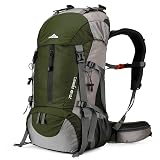
- Cpmprehensive Upgraded Version – The Loowoko hiking travel backpack has been completely upgraded with better materials, stronger straps and more durable zippers, making it one of the most popular hiking daypack options for consumers.
- Rain Cover Included – Made with high quality tear Polyester and nylon fabric, tear resistant, anti-scratch, wear resistant. Come with extra waterproof rain cover pouch on the bottom pouch, prevent the water and dust into the backpack, protect your valuables from heavy rain and keep everything dry.
- No Internal Frame – This lightweight & comfortable hiker backpack is specially designed for outdoor enthusiasts. Breathable mesh shoulder straps with plentiful sponge padding help relieve the stress from your shoulder. Widened and thickened S-type shoulder straps and high elastic breathable back support for best ventilation and easing burden, gives you more comfortable experience.