


All products are selected by our Sharp Survivalist editors. If you buy something through our links as an Amazon Associate we earn from qualifying purchases.
Preparedness isn’t about fear — it’s about having a concrete plan and reliable tools before disruption hits. Whether you’re preparing for natural disasters, extended power outages, grid failures, or societal disruptions, the equipment you choose determines how long you can sustain yourself and your family without outside support. This guide covers the most critical categories of prepper gear, what to prioritize in each, and what separates functional preparedness equipment from marketing-heavy products that fail when it matters.
How to Think About Prepper Gear
Before buying anything, experienced preppers operate from a tiered readiness model:
- Tier 1 – 72-hour emergency kit: Handles short-term disasters (hurricanes, power outages, mandatory evacuation)
- Tier 2 – 2-week home supply: Covers extended disruptions where infrastructure is compromised but evacuation isn’t required
- Tier 3 – Long-term self-sufficiency: 1–12 months of food, water, medical, and energy independence
Most households should build Tier 1 and Tier 2 before investing in Tier 3. A well-stocked two-week supply handles the vast majority of real-world emergency scenarios.
Water Storage and Purification Gear
Water is the most critical prepper supply. Municipal water systems fail during earthquakes, flooding, and extended power outages. The standard recommendation is one gallon per person per day for drinking and basic sanitation.
Storage:
- WaterBOB bathtub bladder: Fills a standard bathtub with up to 100 gallons of clean water in minutes. Cheap, compact, and effective for short-notice emergencies when you have warning time.
- Food-grade water barrels (55-gallon): The standard for home water storage. Requires a hand pump and should be rotated annually.
- HDPE water cans (5–7 gallon): Portable, stackable, and easy to transport during evacuation. More practical than large barrels for mobile scenarios.
Purification:
- Berkey gravity filter: Filters up to 6,000 gallons without electricity or pressure. Removes bacteria, viruses, heavy metals, chlorine, and most chemical contaminants. A cornerstone item for serious preppers.
- Sawyer Squeeze or LifeStraw: Compact, lightweight filters for bug-out bags or vehicle kits. Effective for bacteria and protozoa. Not rated for viruses without a boil or chemical step.
- Chlorine dioxide tablets: Treat 1 liter per tablet. Effective against Cryptosporidium (iodine is not). Shelf stable for years.
Food Storage Gear
Long-term food storage requires attention to caloric density, nutritional completeness, shelf life, and ease of preparation.
Best food storage approaches:
- Freeze-dried food pouches and buckets: 25-year shelf life. Light, require only water to prepare, nutritionally sound. Higher cost per calorie but highest convenience.
- Mylar bags with oxygen absorbers: The cost-effective approach to long-term bulk grain, bean, and rice storage. A properly sealed 5-gallon Mylar bag with oxygen absorbers stores rice or wheat for 25–30 years. Requires a heat sealer.
- Canned goods rotation: Regular canned food (1–5 year shelf life) forms the practical core of a Tier 2 food supply. Rotate regularly using first-in, first-out (FIFO) organization.
Key items to have:
- Manual can opener (two backups — they fail at the worst time)
- Propane or butane camp stove for off-grid cooking
- Cast iron cookware that works over open flame
- Food-grade 5-gallon buckets with gamma lids for dry goods
Power and Energy Gear
Extended power outages are the most common emergency scenario in modern preparedness. A layered energy strategy covers communication, lighting, cooking, and medical device power.
Lighting:
- Headlamps with rechargeable batteries: Hands-free lighting for all tasks. Carry at least two per person.
- Solar lanterns: No batteries required. Useful for sustained outages where battery supplies are limited.
Power generation and storage:
- Portable power station (1,000+ Wh): Devices like the Jackery 1000 or EcoFlow Delta charge via solar panels, vehicle, or grid. Can power CPAP machines, small appliances, phones, and lights for days to weeks depending on usage.
- Solar panel array: Paired with a power station for indefinite off-grid power generation in adequate sunlight.
- Generator (gasoline or propane): Higher wattage output for running refrigerators, power tools, and medical equipment. Requires fuel storage and cannot be run indoors.
Fuel storage:
- Store gasoline with a fuel stabilizer (PRI-G) for up to 1 year. Rotate regularly.
- Propane stores indefinitely and is safer to keep long-term than gasoline.
Communication and Information Gear
When cell towers fail or are overloaded, communication gear determines whether you receive emergency alerts and can coordinate with family members.
- NOAA weather radio (hand-crank or battery): Receives all-hazards alerts without internet or cell service. Essential in disaster-prone regions.
- FRS/GMRS walkie-talkies: Short-range (1–5 miles) local communication for family coordination during grid-down situations.
- Shortwave or AM/FM radio: Access to wide-area emergency broadcasts and information during extended outages.
- Ham radio (amateur radio): The gold standard for prepper communication. With a Technician license (entry-level), you can access local repeaters for regional communication. With a General or Extra license, global communication is possible.
Medical and First Aid Gear
Standard first aid kits are inadequate for preparedness scenarios where professional medical care may be unavailable for days or weeks.
An augmented prepper medical kit should include:
- Israeli bandages (pressure dressings) for hemorrhage control
- Tourniquet (CAT or SOFTT-W) — one per kit minimum
- Hemostatic gauze (QuikClot or Combat Gauze)
- SAM splints and elastic bandages
- Irrigation syringe for wound cleaning
- Antibiotics (consult a physician for prescribing through preparedness-oriented providers)
- OTC medications: pain relievers, antihistamines, anti-diarrheal, electrolyte packets
- Prescription medications (maintain a 90-day supply where possible)
Consider completing a Wilderness First Responder (WFR) or Stop the Bleed course to know how to use your equipment effectively.
Bug-Out Bag (BOB) Essentials
A bug-out bag is a 72-hour kit in a backpack that allows you to evacuate with everything needed for short-term survival. It is not a full wilderness survival kit — it’s a structured emergency kit.
Core BOB components:
- Shelter: Emergency bivy or compact 2-person tent, tarp
- Fire: Ferro rod, lighter, waterproof matches
- Water: 32 oz stainless steel bottle (can boil in), Sawyer Squeeze filter, water purification tablets
- Food: High-calorie, low-prep foods (protein bars, freeze-dried meals, peanut butter packets)
- Navigation: Topo map of your region, compass
- Medical: Compact IFAK (individual first aid kit)
- Light: Headlamp with extra batteries
- Communication: NOAA radio, charged power bank
- Tools: Fixed-blade survival knife, multi-tool, paracord (50+ feet)
- Documents: Copies of IDs, insurance cards, emergency contacts in a waterproof bag
Security Considerations
Prepper security is a topic with strong opinions, but the practical baseline is simple: protect your home and family from the opportunistic threats that increase during civil disruptions.
- Reinforced door hardware: Longer strike plate screws (3 inches into framing) and deadbolts reduce forced entry risk significantly and cost almost nothing.
- Security film for windows: Slows smash-and-grab entry and contains glass during storms.
- Community networking: Knowing your neighbors and establishing a mutual aid network is one of the most effective security measures available — and free.
Frequently Asked Questions
What is the most important prepper gear to buy first? Water storage and purification is the highest-priority prepper investment. Most people have almost no stored water, yet water system failures are among the most common outcomes of natural disasters. A Berkey filter, a WaterBOB, and a case of chlorine dioxide tablets address the most critical vulnerability immediately and cost under $400 combined.
How much food should a prepper store? Start with a 2-week supply per person, then expand to 3 months. A 2-week supply is achievable with regular grocery store purchases in a single shopping trip and provides meaningful coverage for most real-world emergency scenarios without the cost or space requirements of long-term food storage.
What is a bug-out bag? A bug-out bag (BOB) is a pre-packed backpack containing enough supplies to sustain one person for 72 hours during an emergency evacuation. It is designed to be grabbed quickly and contains shelter, water, food, medical, navigation, and communication essentials. Every adult in a household should have one ready.
Do I need a generator as a prepper? A generator is useful but not essential at the start of your preparedness journey. A portable power station charged by solar panels covers the most common needs (phone charging, lighting, medical devices) without the noise, fuel storage, and carbon monoxide risks of a gasoline generator. Add a generator when your other Tier 1 and Tier 2 supplies are complete.
What communication tools do preppers use? The most practical communication tools for most preppers are a hand-crank NOAA weather radio, FRS/GMRS walkie-talkies for family coordination, and a battery-powered AM/FM radio for emergency broadcasts. Ham radio is the most capable option for long-range communication and is worth pursuing for serious preppers willing to obtain a license.
How do I store water long-term? Store water in food-grade containers (HDPE plastic rated for water storage or glass). Add 8 drops of unscented liquid chlorine bleach per gallon to prevent bacterial growth if storing tap water. Seal containers tightly, store in a cool and dark location, and rotate every 6–12 months. Commercially sealed water bottles have a shelf life of 2 years but remain safe indefinitely if stored properly away from light and heat.
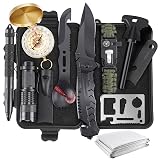
- 【13 in 1Survival Kits】The 13 in 1survival kits contains 13 essential and practical tactical gears and survival tools to meet your different needs in outdoor activities like camping hiking backpacking fishing, etc. The kit includes: survival bracelet, tactical pen, compass, tactical flashlight, flint stone & scraper, multifunctional card, 8 in 1multi-use spoon & fork, fake shrimp bait. With these professional survival gear and equipment you can enjoy a safe and easy outdoor time.
- 【Cool Gifts for Men Who Have Everything】The military grade survival kits are cool gifts for men who have everything, great birthday Christmas Valentine’s Day Anniversary Day gift ideas for dad husband boyfriend teen boys, and scouts who love outdoor adventures.
- 【High Quality Survival Kits】This is a high quality survival tool set. The tool box is made of military grade ABS material. And all the survival gears in it are made of high-quality, long lasting materials, providing excellent safety and durability. This survival kit is a perfect and reliable companion to be prepared for any emergencies. It’s an unique and thoughtful gift for dad mum family friends from daughter son.