

All products are selected by our Sharp Survivalist editors. If you buy something through our links as an Amazon Associate we earn from qualifying purchases.
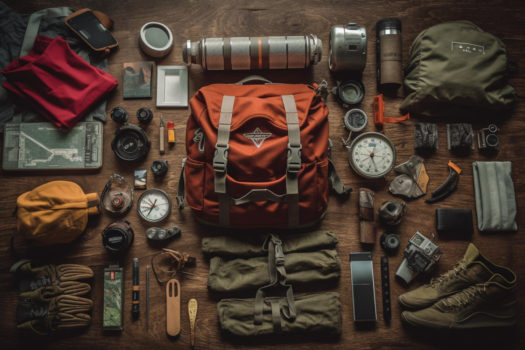
A bug out bag (BOB) is a portable emergency kit containing everything a person needs to survive for 72 hours or more when forced to evacuate quickly due to a disaster, civil unrest, or any life-threatening situation. For preppers, it’s not a paranoia prop — it’s a calculated survival tool built around real-world emergency scenarios.
What Is a Bug Out Bag?
A bug out bag is a pre-packed backpack or duffel ready to grab at a moment’s notice. The term comes from military slang — “bugging out” means evacuating a position rapidly. In the prepper community, a BOB represents the foundational layer of any emergency preparedness plan.
Unlike a standard first aid kit or go bag, a fully equipped prepper bug out bag is designed for self-sufficiency across multiple threat scenarios: natural disasters (earthquakes, floods, wildfires), infrastructure collapse, grid-down situations, and forced displacement.
The 72-hour survival window is the benchmark because FEMA and emergency management agencies consistently note that organized disaster relief typically takes three days to mobilize effectively.
How to Choose the Right Bug Out Bag
Before packing a single item, the bag itself matters. Key factors:
- Capacity: 40–65 litres suits most adults for a 72-hour kit without becoming unmanageable
- Frame type: Internal frame packs distribute weight better for long treks; frameless options work for lighter loadouts
- Material durability: Look for 500D–1000D Cordura nylon or equivalent ripstop fabrics
- MOLLE webbing: Modular Lightweight Load-carrying Equipment attachments let you expand storage without replacing the bag
- Colour: Earth tones (coyote tan, OD green, black) reduce visibility in most environments
- Weight when packed: A loaded bug out bag should not exceed 25–30% of your body weight
Quality brands trusted in the prepper and tactical communities include Maxpedition, 5.11 Tactical, Mystery Ranch, and GORUCK — though budget-friendly alternatives exist for those building a starter kit.
The Bug Out Bag Checklist: Essential Categories
1. Water and Hydration
Water is the non-negotiable survival priority. The human body begins showing critical impairment within 24 hours without it.
- Water storage: Two 1-litre BPA-free bottles or a hydration bladder (2–3L)
- Filtration: Sawyer Squeeze or LifeStraw for field purification
- Purification tablets: Iodine or chlorine tablets as a backup
- Collapsible container: For gathering water from natural sources
Aim to carry at least 2 litres at all times and have the means to purify an additional 10+ litres per day.
2. Food and Nutrition
Caloric density and shelf stability are the priorities. Prepper emergency food should require minimal preparation and no refrigeration.
- High-calorie energy bars (Clif, Mainstay, or military-spec ration bars)
- Freeze-dried meals (Mountain House, Backpacker’s Pantry)
- Trail mix, jerky, and compact nut butter packets
- Compact camp stove with fuel canisters (MSR PocketRocket or similar)
- Titanium spork and lightweight cookpot
Target 2,000–2,500 calories per day minimum.
3. Shelter and Warmth
Exposure kills faster than starvation. A bug out bag must contain the means to maintain core body temperature in adverse conditions.
- Emergency bivy or Mylar survival blanket
- Lightweight tarp (8×10 ft silnylon) and 550 paracord (50 ft minimum)
- Compact sleeping bag rated below expected ambient temperature
- Work gloves and wool or merino base layers
- Rain poncho or waterproof shell jacket
4. Fire Starting
Fire provides warmth, water purification capability, signalling, and psychological stability in a survival situation.
- Waterproof matches (stored in a sealed container)
- BIC lighters (x3 — redundancy is strategy)
- Ferro rod and striker
- Fire tinder cubes or petroleum jelly cotton balls
Carry at least three independent ignition sources.
5. First Aid and Medical
A prepper bug out bag first aid kit goes beyond bandages.
- Trauma kit: tourniquet (CAT or SOFTT-W), haemostatic gauze (QuikClot), Israeli pressure bandage
- Standard first aid: antiseptic wipes, adhesive bandages, blister treatment, SAM splint
- Medications: prescription meds (30-day supply), pain relievers, antihistamines, anti-diarrheals
- Nitrile gloves and CPR face shield
Consider completing a basic wilderness first aid course — gear is only as effective as the knowledge behind it.
6. Navigation and Communication
When digital infrastructure fails, analogue tools become life-critical.
- Topographic maps of your region (laminated)
- Baseplate compass (Silva or Suunto)
- Handheld GPS device (Garmin inReach with satellite messaging)
- Emergency whistle (Fox 40 or similar — audible at 100+ decibels)
- AM/FM/NOAA hand-crank or solar emergency radio
7. Tools and Multi-Use Gear
- Multi-tool (Leatherman Wave or Gerber Center-Drive)
- Fixed-blade knife (Mora Companion or similar — versatile and affordable)
- Duct tape (wrapped around water bottle to save space)
- Zip ties (assorted sizes)
- Headlamp with extra batteries (or hand-crank/solar)
- Signal mirror
8. Documentation and Finances
- Waterproof pouch with photocopies of: passport, driver’s licence, insurance cards, property deeds, medical records
- USB drive with encrypted digital backups
- Emergency contact list (printed — don’t rely on a phone)
- Cash in small denominations (ATMs fail in grid-down scenarios)
9. Hygiene and Sanitation
Hygiene directly impacts immune resilience during prolonged displacement.
- Hand sanitiser and biodegradable soap
- Toothbrush and toothpaste tablets
- Microfibre towel
- N95 masks and nitrile gloves
- Menstrual hygiene products if applicable
- Toilet paper in a zip-lock bag
Bug Out Bag Weight Management
The single most common prepper mistake is overpacking. A bag that immobilises you defeats its purpose entirely.
Use the base weight + consumables system:
- Base weight (bag + gear, no food/water): target under 10 kg (22 lbs)
- Consumables (food, water, fuel): add 3–5 kg
- Total carry weight: 13–15 kg is manageable for most adults across varied terrain
Audit every item against the question: Does this serve more than one function? Redundancy matters; dead weight does not.
Bug Out Bag Maintenance and Rotation Schedule
A bug out bag is not a one-time project. Treat it as a living system:
- Every 6 months: Rotate food and water, check battery charge levels, inspect gear for damage
- Annually: Review medications for expiry, update documents, reassess seasonal clothing
- After any local emergency event: Replenish used items immediately
Store the bag in an accessible, consistent location — near a bedroom door or primary exit point.
Frequently Asked Questions
What is the difference between a bug out bag and a get home bag? A bug out bag is designed to sustain you away from home for 72+ hours. A get home bag (GHB) is kept in your vehicle or workplace and contains just enough supplies to reach your home or a pre-designated rally point safely.
How much should a prepper bug out bag cost? A functional starter bug out bag can be built for $150–$300 using reliable but non-premium gear. A fully equipped kit with quality tactical, medical, and communication tools typically ranges from $500–$1,500+. Prioritise water filtration, shelter, and medical gear first.
Should children have their own bug out bags? Children aged 8 and older can carry a scaled-down bag (10–15% of body weight) containing personal items, snacks, a water bottle, and comfort items. Adults in the group carry critical survival gear.
What is the best bug out bag for beginners? Begin with a 40–50 litre pack with an internal frame and MOLLE attachments. Focus first on water, fire, shelter, and a basic first aid kit before expanding into communications and defensive tools.
How long should a bug out bag last? The standard benchmark is 72 hours (3 days). Experienced preppers often extend this to a 7-day or even 30-day loadout, typically supplemented with cached supplies at pre-planned waypoints along a bug out route.
Where should I store my bug out bag? Store it near your primary exit — a bedroom closet, hallway, or vehicle. Avoid locations that could become inaccessible during the specific emergency scenarios most likely in your region (e.g., don’t store it in a basement if flooding is your primary threat).

- [Preparedness for the Unknown]: While no one can predict when or how severe a disaster or unexpected event will be, our 262pcs survival kit helps your family stay prepared during the critical first 72 hours. Designed for family use, it was developed in collaboration with survival experts, outdoor professionals, special forces operators, and mountain guides. Whether you’re preparing for earthquakes, tornadoes, wildfires, or hurricanes, our survival kit provides peace of mind.
- [Comprehensive Emergency Supply Kit]: The included emergency supplies are stored in a bright red pouch, containing tweezers, scissors and pins, non-woven pad, triangular cotton cloth, cotton swabs, cotton balls, a generous supply of adhesive strips etc., meeting your general emergency and outdoor needs. It also includes an emergency information card to record your basic information, helping others quickly access important information when needed.
- [Safety Companion for Journey]: Our emergency kit includes many survival gear and supplies to ensure access to food, water, warmth, and light in a crisis. The fishing kit and multi-usage spoon help you catch and prepare food, while the collapsible water container bag helps store water. Fire starter and stick make it easy to build a fire. A flashlight, camping lamp, and glow sticks provide up to 72 hours of lighting, crucial for signaling for help and safe navigation.