

All products are selected by our Sharp Survivalist editors. If you buy something through our links as an Amazon Associate we earn from qualifying purchases.
Prepping essentials are the core supplies, skills, and systems that every prepared household must have before adding more advanced or specialized gear. Understanding what is truly essential — versus what is interesting but non-critical — is the most important distinction a new prepper can make. This guide identifies the genuine fundamentals of preparedness and explains why each category is non-negotiable.
The Hierarchy of Prepping Essentials
Emergency preparedness has a biological hierarchy that dictates supply priority. Human survival requirements follow this order:
- Shelter and temperature regulation — exposure kills within hours
- Water — survival window is 72 hours without it
- Food — humans can survive 3 weeks without food under normal conditions
- Medical — injury and illness threaten all other survival categories
- Communication and security — critical for rescue, coordination, and protection
Build your prepping essentials around this hierarchy rather than purchasing what feels most dramatic or interesting.
Essential Water Supplies
Water is the highest-priority prepping essential.
Stored Water: A minimum of 1 gallon per person per day. For a family of four, 30 days of water requires 120 gallons. Use food-grade, BPA-free storage containers and treat with unscented chlorine bleach (8 drops per gallon) if storing tap water for extended periods.
Purification Capability: Stored water alone is insufficient. You need the ability to purify untreated water from natural sources. A gravity-fed filter (Berkey), personal filter (Sawyer Squeeze), and chemical backup (Aquatabs or Potable Aqua) provide multi-method redundancy.
Collection Capability: Rain barrels, food-grade tarps, and collapsible containers extend your water supply beyond fixed storage.
Essential Food Supplies
Caloric density, nutritional balance, and shelf life are the three criteria for essential prepper food:
- Freeze-dried and dehydrated meals — 25-year shelf life, lightweight, complete nutrition
- Whole grains (rice, oats, wheat berries) — stored in mylar bags with oxygen absorbers
- Dried legumes (beans, lentils) — protein, fiber, and long shelf life
- Canned goods — proteins, vegetables, fruits with 3–7 year shelf life
- Fats and oils — calorie density; coconut oil stores 2+ years
- Salt, sugar, honey — indefinite shelf life, essential for food preservation and energy
Cooking Capability: Food storage is incomplete without a power-independent cooking method. A propane camp stove with 30+ lbs of stored propane, a wood gasifier stove, or a solar cooker each address this need differently. Have at least two methods.
Essential Shelter and Temperature Essentials
Thermal exposure — extreme cold or heat — is the fastest-acting survival threat outside of trauma. Essential shelter prepping items include:
- Emergency Mylar blankets (minimum 4 per person)
- Heavy-duty sleeping bags rated to your region’s lowest temperatures
- Tarp and paracord for improvised shelter construction
- Work gloves, wool hats, and layered cold-weather clothing
- A wood stove, propane heater, or kerosene heater for indoor emergency heating
Essential First Aid and Medical Supplies
Medical emergencies can become fatal when professional care is inaccessible. Essential prepper medical supplies include:
- Stop-the-bleed kit: tourniquet, hemostatic gauze, Israeli bandage, chest seals
- Infection control: antiseptic solution, antibiotic ointment, sterile dressings
- Oral medications: pain relievers, antihistamines, antidiarrheal, antacid
- Prescription reserves: minimum 30-day supply of any critical daily medications
- Reference materials: The Survival Medicine Handbook or Wilderness Medicine reference
Essential Communication Supplies
When cellular networks fail, communication options collapse for most households. Essential prepper communication tools:
- NOAA weather radio (battery or hand-crank) for emergency alert reception
- Walkie-talkies (FRS/GMRS frequency) for short-range household and neighborhood communication
- Signal devices: whistle, signal mirror, surveyor’s tape
- Paper maps: topographic maps of your region; do not rely on digital navigation
Essential Power and Energy Supplies
Power independence is increasingly recognized as a core prepping essential:
- Headlamps and flashlights with rechargeable batteries and solar charger
- Portable power station (Jackery Explorer, EcoFlow) with solar panel input
- Propane or dual-fuel generator with 30-day fuel reserve
- Fire starting capability: lighters, waterproof matches, ferrocerium rods
Essential Documents and Financial Preparedness
Overlooked by many new preppers, documentation is critical for recovery:
- Waterproof container with copies of: ID, passport, insurance policies, property deeds, medical records
- USB backup of all key documents
- Cash reserve in small denominations (minimum $500, preferably $1,000+)
Essential Skills — The Overlooked Prepping Essential
The most overlooked prepping essential is not a product. It is competence. Supplies without skills create false confidence. Essential prepping skills include:
- CPR and basic trauma care
- Fire starting with multiple methods
- Water procurement and field purification
- Land navigation using map and compass
- Food preservation (canning, dehydrating, fermenting)
Frequently Asked Questions
What is the most essential prepping supply? Water, without question. No other supply failure produces casualties as quickly. Prioritize water storage and purification before any other category.
How long should my prepping essentials last? Start with 72 hours, expand to 2 weeks, then build toward a 90-day supply. Each stage dramatically increases your household’s resilience against increasingly severe disruptions.
Can prepping essentials fit in an apartment? Yes. A 30-day supply for one or two people requires approximately 20–30 cubic feet of storage. Vertical shelving, under-bed storage containers, and closet optimization make apartment prepping practical.
What’s the difference between prepping essentials and a bug-out bag? Prepping essentials cover your full household preparedness system for sheltering in place. A bug-out bag is a subset — a portable kit for evacuation scenarios containing 72-hour survival capability for one person.
Are prepping essentials expensive? A functional 72-hour essential kit can be assembled for under $100. A comprehensive 30-day household system typically costs $500–$1,500 built incrementally over 6–12 months.
How often should I update my prepping essentials? Conduct a full inventory inspection quarterly. Rotate food and water, test equipment, refresh medications, and update documents annually at minimum.

- [Preparedness for the Unknown]: While no one can predict when or how severe a disaster or unexpected event will be, our 262pcs survival kit helps your family stay prepared during the critical first 72 hours. Designed for family use, it was developed in collaboration with survival experts, outdoor professionals, special forces operators, and mountain guides. Whether you’re preparing for earthquakes, tornadoes, wildfires, or hurricanes, our survival kit provides peace of mind.
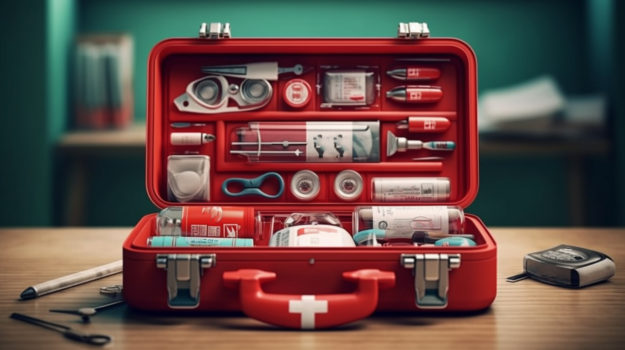
- [Comprehensive Emergency Supply Kit]: The included emergency supplies are stored in a bright red pouch, containing tweezers, scissors and pins, non-woven pad, triangular cotton cloth, cotton swabs, cotton balls, a generous supply of adhesive strips etc., meeting your general emergency and outdoor needs. It also includes an emergency information card to record your basic information, helping others quickly access important information when needed.
- [Safety Companion for Journey]: Our emergency kit includes many survival gear and supplies to ensure access to food, water, warmth, and light in a crisis. The fishing kit and multi-usage spoon help you catch and prepare food, while the collapsible water container bag helps store water. Fire starter and stick make it easy to build a fire. A flashlight, camping lamp, and glow sticks provide up to 72 hours of lighting, crucial for signaling for help and safe navigation.