

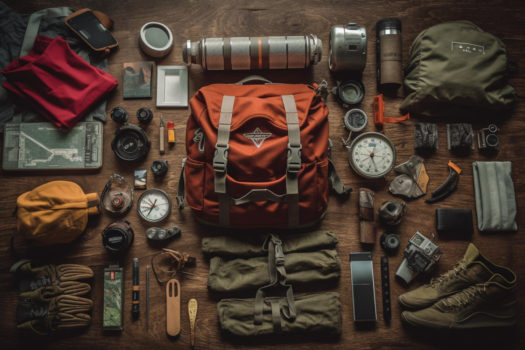
All products are selected by our Sharp Survivalist editors. If you buy something through our links as an Amazon Associate we earn from qualifying purchases.
Whether you’re a weekend hiker, long-distance backpacker, or backcountry hunter, having the right wilderness survival gear can be the difference between a manageable emergency and a life-threatening situation. This guide breaks down the most critical survival equipment categories, what to look for in each, and why these tools matter in real-world conditions.
What Is Wilderness Survival Gear?
Wilderness survival gear refers to tools, equipment, and supplies designed to help individuals sustain life and signal for rescue in remote outdoor environments. The best survival kits address the five core survival priorities: shelter, water, fire, navigation, and signaling. Understanding these priorities shapes every smart gear decision you make before heading into the backcountry.
Essential Wilderness Survival Gear Categories
1. Shelter and Warmth
Exposure kills faster than almost any other wilderness threat. Hypothermia can set in within hours in wet or windy conditions, even in mild temperatures.
Emergency bivouac sacks (bivy sacks) are compact, lightweight, and reflect up to 90% of body heat. Brands like SOL and Survive Outdoors Longer produce mylar-based options that pack down to fist size. For longer trips, a lightweight tarp or ultralight tent adds significant protection against wind, rain, and snow.
Emergency thermal blankets serve dual purposes — warmth and signaling — making them a non-negotiable addition to any survival kit. Pair these with a compact sleeping bag rated below expected temperatures for layered protection.
2. Fire-Starting Tools
Fire provides warmth, purifies water, signals rescuers, and boosts morale during survival scenarios. Experienced wilderness guides recommend carrying at least three fire-starting methods:
- Ferrocerium (ferro) rod — works when wet, lasts thousands of strikes
- Waterproof matches — stored in a sealed container
- Butane lighter — reliable in calm conditions, but fails in cold or wind
Tinder materials matter just as much as the ignition source. Carry commercial fire starters, fatwood sticks, or petroleum-based tinder cubes to ensure ignition in damp conditions.
3. Water Purification and Hydration
Dehydration and waterborne illness are serious threats in wilderness environments. Untreated water from streams, rivers, and lakes can harbor Giardia, Cryptosporidium, and bacteria that cause rapid incapacitation.
Water filtration options by reliability:
- Squeeze filters (e.g., Sawyer Squeeze) — removes 99.99% of bacteria and protozoa; lightweight at under 3 oz
- UV purifiers (e.g., SteriPen) — neutralizes viruses and bacteria in 60 seconds; requires batteries
- Chemical tablets (iodine or chlorine dioxide) — backup option; effective against viruses where filters may not be
- Gravity filters — ideal for basecamp use and group travel
Carry a stainless steel water bottle as a primary vessel since it can be boiled directly over fire — a critical redundancy when filters fail.
4. Navigation Tools
GPS devices fail when batteries die. Smartphones lose signal. Every wilderness traveler should be proficient with analog navigation tools regardless of what electronics they carry.
Core navigation gear includes:
- Topographic map of your specific area — laminated or stored in a dry bag
- Baseplate compass (e.g., Suunto A-10 or Silva Ranger) — works in any conditions
- Altimeter watch — helps confirm position against contour lines on topo maps
Modern dedicated GPS devices like the Garmin inReach series add satellite communication capability, allowing SOS messaging even without cell coverage — a significant upgrade from GPS-only units.
5. Cutting Tools and Multi-Tools
A quality fixed-blade knife is the single most versatile survival tool in your kit. It processes food, builds shelter, creates tinder, administers first aid, and serves as a defensive tool if needed.
Look for full-tang construction, a blade length of 4–6 inches, and a high-carbon or stainless steel blade (1095 carbon or 440C stainless are reliable choices). Brands like Morakniv offer professional-grade fixed blades at accessible price points.
Multi-tools (Leatherman, Victorinox) complement a fixed blade with pliers, saws, wire cutters, and screwdrivers in a compact form factor. Carry both — they serve different functions.
6. Signaling Devices
Rescue depends on being found. Passive and active signaling gear dramatically improves the odds of being located in a search and rescue operation.
Top signaling tools:
- Personal Locator Beacon (PLB) — transmits your GPS coordinates to search and rescue via satellite; no subscription required; one-time use activation
- Satellite messenger (e.g., Garmin inReach Mini 2) — two-way communication and SOS; requires subscription
- Signal mirror — visible for miles in direct sunlight; no batteries required
- Whistle — Fox 40 or similar pealess design carries farther than voice and requires less energy
A PLB or satellite communicator is increasingly considered non-negotiable for solo travel or remote expeditions.
7. First Aid and Trauma Supplies
Wilderness first aid situations differ from urban emergencies — response times are measured in hours or days, not minutes. A wilderness-specific first aid kit should address:
- Wound closure (steri-strips, suture kit, hemostatic gauze)
- Blister and foot care (moleskin, athletic tape)
- Splinting materials
- Medications (antihistamines, pain relievers, antidiarrheal)
- Tourniquet (CAT or SOFTT-W rated)
Training matters as much as equipment. Consider a Wilderness First Responder (WFR) or Wilderness First Aid (WFA) course to maximize the effectiveness of your kit.
How to Build a Survival Kit: The Rule of Threes
Build your gear around the survival rule of threes: you can survive 3 minutes without air, 3 hours without shelter in extreme conditions, 3 days without water, and 3 weeks without food. This framework helps prioritize what gear to carry when weight or space is limited.
Frequently Asked Questions
What is the most important piece of wilderness survival gear? Shelter comes first in most survival situations because exposure and hypothermia are the fastest killers. A quality emergency bivy and fire-starting kit address the most immediate threats.
How heavy should a wilderness survival kit be? A functional day-use survival kit should weigh between 1–2 lbs. A comprehensive multi-day kit with water filtration, navigation tools, and communication devices typically runs 3–5 lbs depending on technology choices.
What’s the difference between a PLB and a satellite messenger? A PLB sends a one-way SOS signal to emergency services via satellite — no subscription, no two-way communication. A satellite messenger allows two-way texting, location sharing, and SOS, but requires an active subscription plan.
Are survival kits worth it for day hikes? Yes. Day hikers account for a significant proportion of wilderness search and rescue calls. Conditions change rapidly — a lightweight survival kit adds minimal weight and provides critical backup when the unexpected happens.
What survival gear do professional wilderness guides carry? Most certified guides carry a fixed-blade knife, fire-starting kit, emergency bivy, water filter, topo map and compass, headlamp with spare batteries, signaling mirror, whistle, and a satellite communicator as standard loadout on every trip.

- [Preparedness for the Unknown]: While no one can predict when or how severe a disaster or unexpected event will be, our 262pcs survival kit helps your family stay prepared during the critical first 72 hours. Designed for family use, it was developed in collaboration with survival experts, outdoor professionals, special forces operators, and mountain guides. Whether you’re preparing for earthquakes, tornadoes, wildfires, or hurricanes, our survival kit provides peace of mind.
- [Comprehensive Emergency Supply Kit]: The included emergency supplies are stored in a bright red pouch, containing tweezers, scissors and pins, non-woven pad, triangular cotton cloth, cotton swabs, cotton balls, a generous supply of adhesive strips etc., meeting your general emergency and outdoor needs. It also includes an emergency information card to record your basic information, helping others quickly access important information when needed.
- [Safety Companion for Journey]: Our emergency kit includes many survival gear and supplies to ensure access to food, water, warmth, and light in a crisis. The fishing kit and multi-usage spoon help you catch and prepare food, while the collapsible water container bag helps store water. Fire starter and stick make it easy to build a fire. A flashlight, camping lamp, and glow sticks provide up to 72 hours of lighting, crucial for signaling for help and safe navigation.